
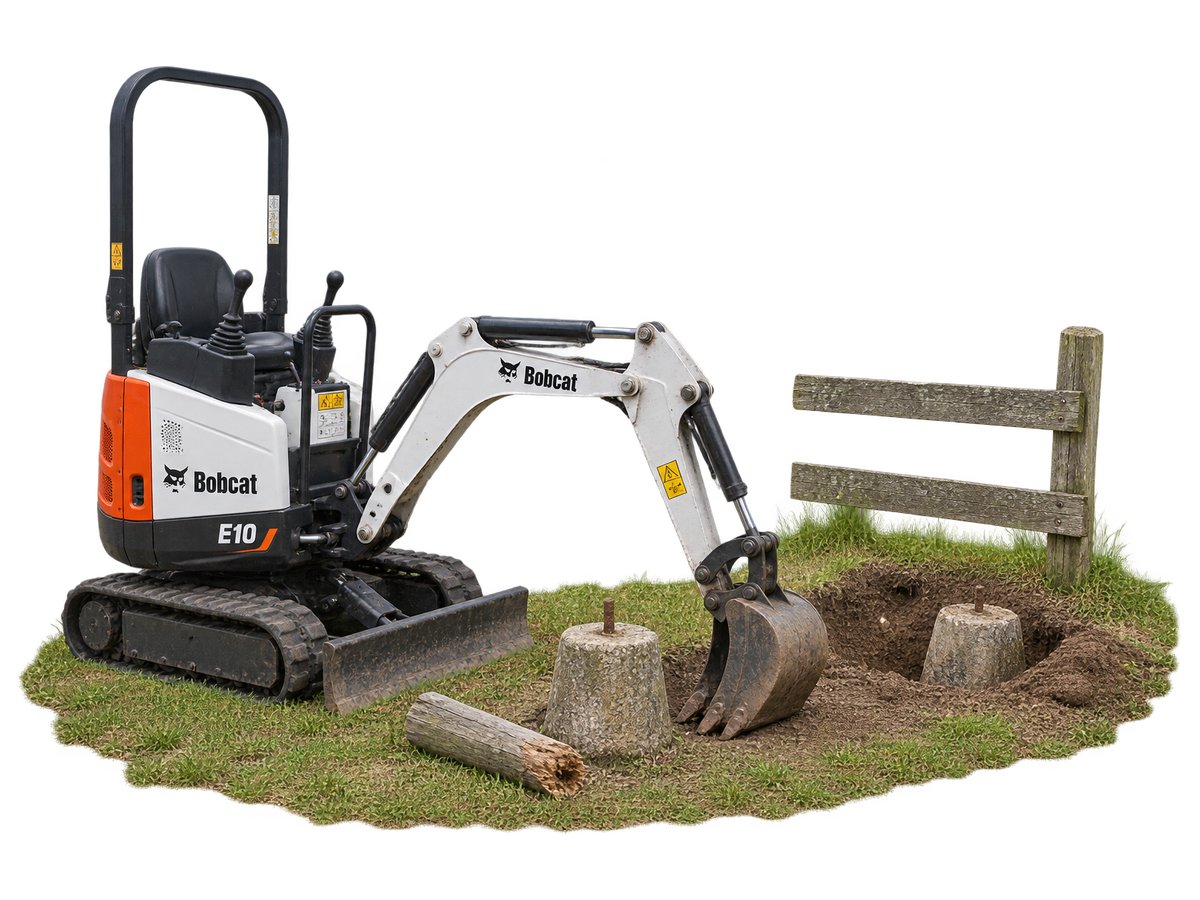
Getting old post concrete out, in order
The old footings are the whole problem. Decide what to do with each one before you book a machine.
The dig machine and the haul trailer usually ride together on one delivery when access allows. Tell us the footing count and the route and we will put the right pair on the truck.
Count the footings and decide which ones have to go
Walk the old line and note every post with concrete at the base, how big the collar looks, and whether the new fence will land on the same spots. If your plan lets you shift the new posts a foot or two along the line, many old footings can stay in the ground and you only remove the ones in the way at corners and gates. Confirm the property line before you commit to a new layout; a metal detector helps you look for pins, and finding metal does not establish the legal boundary.
Metal detector for pins and buried metal. No digging equipment yet.
MISS DIG before anything comes out
Contact MISS DIG 811 at least three business days before you dig; it is free and required by Michigan law. Old fence lines often share the easement with buried utilities. MISS DIG does not mark private lines, so check for irrigation, invisible fence and landscape lighting along the run yourself.
None. This is a phone call or web ticket.
Dig each footing out whole where you can
The cleanest removal is to dig beside the footing and lift it out in one piece, post stub and all. The E10 does this through a standard gate: it retracts to 28 in, digs about 6 ft at the pin and has the bucket force to pry a collar loose. With a clear 6 ft route, the E35 lifts larger footings out faster and loads them straight into a trailer. A loader bucket on the T66-2 or MT100 can pry at a shallow collar once it is exposed, but it cannot dig a tight hole next to one.
Bobcat E10 (tight access) or E35 (open route). T66-2 or MT100 with bucket to carry footings once they are out.
Break what will not come out whole
A large collar, a footing poured against a slab, or a post set in a sidewalk has to be broken down before it lifts. The electric TE 3000 demolition hammer runs off a standard outlet and breaks footings and sidewalks at ground level with no compressor. For a long run of big footings on an open route, the hydraulic breaker on a full-size loader does the same work with the operator in the cab. Breaking concrete produces silica dust; wear a respirator and keep the work wet.
Hilti TE 3000 electric demolition hammer, or the Bobcat hydraulic breaker on the T66-2, SVL65-2 or S570.
Load the concrete and fill the holes
Broken concrete is heavy before it looks like much. The 7x14 dump trailer carries 10.9 cu yd at a 14,000 lb GVWR and needs a truck with a brake controller, and a load of concrete reaches the weight limit long before the walls are full. Load footings with the excavator or a loader bucket rather than by hand. Backfill the old holes and compact the fill so the new line does not settle into them.
7x14 dump trailer. Plate compactor for backfill where new posts or a walk cross the old holes.
Now the new holes follow the plan
With the old concrete gone, the new posts go in like any new fence: diameter and depth from your plan and building department, below the frost line of about 42 in in most of southeast Michigan. If a new hole lands on an old backfilled spot, expect loose fill and plan to dig to undisturbed soil. Our fence planning guide covers the auger choice from here.
Little Beaver, MT100 with auger, or T66-2 with auger, chosen by hole count, soil and access.
Remove the old footings, or build around them
- Every footing you leave in the ground is one you do not dig, break or haul. If your plan allows the new post spacing to shift so new holes fall between old footings, most of the line can stay buried and you remove only what blocks a corner, a gate post or an end post. Cut old post stubs below grade and leave the concrete.
- What forces removal: the new fence has to be exactly on the old posts, the old footing sits where a gate post must go, or the old concrete is heaving and cracking a walk. Then the sequence above applies, one footing at a time.
- What changes the machine: tight access means the E10; an open 6 ft route means the E35 and a loader to carry; concrete poured against a slab or sidewalk means breaking first, with the electric demolition hammer for a few spots or the hydraulic breaker on a full-size loader for many. An auger is never the answer for the old concrete itself; the bit will not pass it.
When to stop and call
- Footings tied into a retaining wall, a pool deck or a building foundation are structural, and removing them is a contractor's job. The same goes for a fence line that shares a trench with a gas or electric service, or old concrete you cannot identify. Call us before you book and describe what you found; if the fleet is not the right tool, we will say so.
The route decides the digger and the hauler.
Measure the clear opening
The E10 retracts to 28 in. The E35, the T66-2 and the dump trailer all need an open 6 ft or more. An old fence coming down often opens the route itself; plan the order so the panel comes out before the machine arrives.
Plan the haul path
Footings and broken concrete have to travel from each hole to the trailer. Tracks spread weight; they do not prevent all lawn damage. A loaded trailer cannot sit on a soft lawn.
Count and size the footings
Number of footings, approximate collar size, and whether any are tied to a slab or walk. That sets dig versus break and how many trailer loads.
Before ground disturbance: — arrange utility locating through MISS DIG 811 at least three business days ahead, and check private lines along the old fence yourself. Review site hazards with our team.
Your post-concrete removal checklist
Save these details before you request equipment.
- Footing count and which ones must come out
- Whether the new layout can offset from the old posts
- MISS DIG 811 ticket date; private lines walked
- Clear opening and haul path to the trailer
- Footings tied to a slab, walk or wall
- Truck with brake controller for the dump trailer, or delivery
- New hole diameter and depth from the plan
- Delivery location and preferred dates
Let's match the machine to your job.
Tell us what you're working on. Our Hamburg team serves Southeast Michigan, seven days a week.
(810) 231-7368
Explore equipment for this guide
Questions before you rent
Can I just auger through the old concrete?
No. An auger bit cuts soil and lifts it on the flights; it stops on concrete and will spin or walk off the footing. Even a hydraulic auger on a loader does not drill through a cured collar. The old concrete has to be dug out whole, broken and lifted, or left in place with the new post shifted beside it. Once the footing is gone, the new hole is a normal auger job to the depth and diameter your plan calls for.
Which excavator for pulling old footings?
The E10 if the only way in is a gate or side yard: it retracts to 28 in, digs about 6 ft at the pin and has enough bucket force to pry a collar loose once you dig beside it. The E35 if a clear 6 ft route is open: it lifts larger footings out faster and sets them straight into a trailer. The E48 adds reach and lift, not depth, and is more than a fence line needs. The first bucket is included with each; a narrow bucket digs a tighter hole beside the footing.
Demolition hammer or hydraulic breaker?
The TE 3000 electric demolition hammer runs on a standard outlet, weighs about 60 lb and is the pick for a few footings, a post set in a sidewalk, or any spot a loader cannot reach. The Bobcat hydraulic breaker mounts on the T66-2, SVL65-2 or S570 and keeps the operator in the cab for a long run of large footings on an open route; attachments rented with a Ward's skid steer are half price. Both make silica dust; wear a respirator and keep the work wet.
How do I get rid of the concrete?
The 7x14 dump trailer carries 10.9 cu yd at a 14,000 lb gross rating, tows on a 2 5/16 in ball and needs a truck with a brake controller. Concrete and footings with soil on them reach the weight limit long before the trailer looks full, so load by weight and plan more than one trip for a long line. Check where your township or a local recycler accepts clean concrete before you load. We also deliver the trailer with the machine: $85 round trip within 45 minutes for a truck and trailer load, $125 for a dual-machine load, confirmed at checkout.
Does the new fence have to go in the same holes?
That is a question for your plan and your township, not for us. If spacing can shift so new holes fall between old footings, you remove only the ones at corners, gates and ends and leave the rest buried with the post stubs cut below grade. If the new line must match the old posts exactly, every footing on the line comes out. Either way, the new holes follow the diameter and depth on your approved plan and sit below the frost line of about 42 in in most of southeast Michigan.