Narrow toothed bucket
Cut. Trench. Pry.
Best for a trench you will put something in, and for breaking hard ground.
- Trench width close to the pipe plus bedding
- Teeth bite into clay, roots and frozen crust
- Less spoil to put back

Text us at (810) 231-7368
Send a text from your phone, or open your computer's messaging app.
Menu
Not sure what you need? Our team can help.
Hamburg, Michigan • Serving Southeast MichiganEquipment comparison
Narrow buckets dig clean trenches. Wide buckets move dirt. Here is which sizes come on each machine and how to pick.
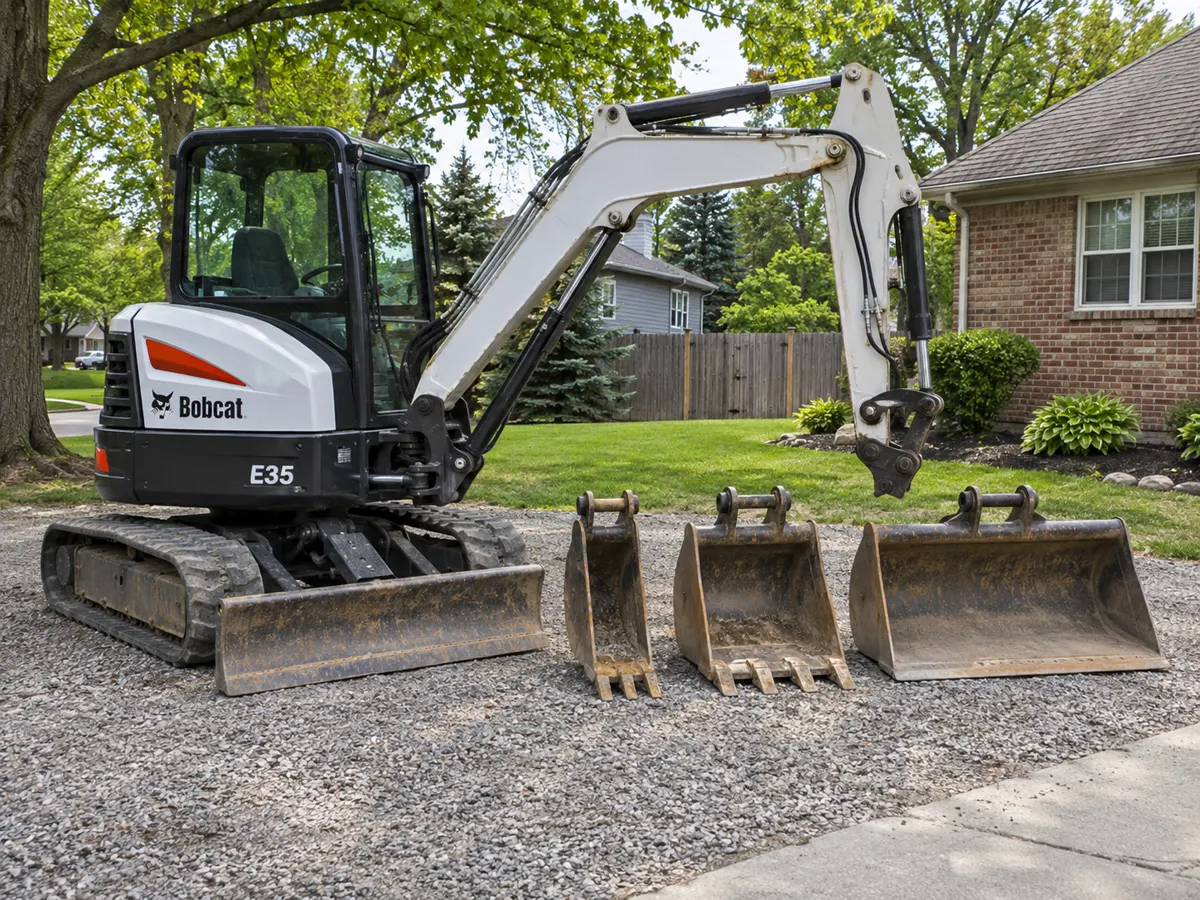
Narrow toothed bucket
Best for a trench you will put something in, and for breaking hard ground.
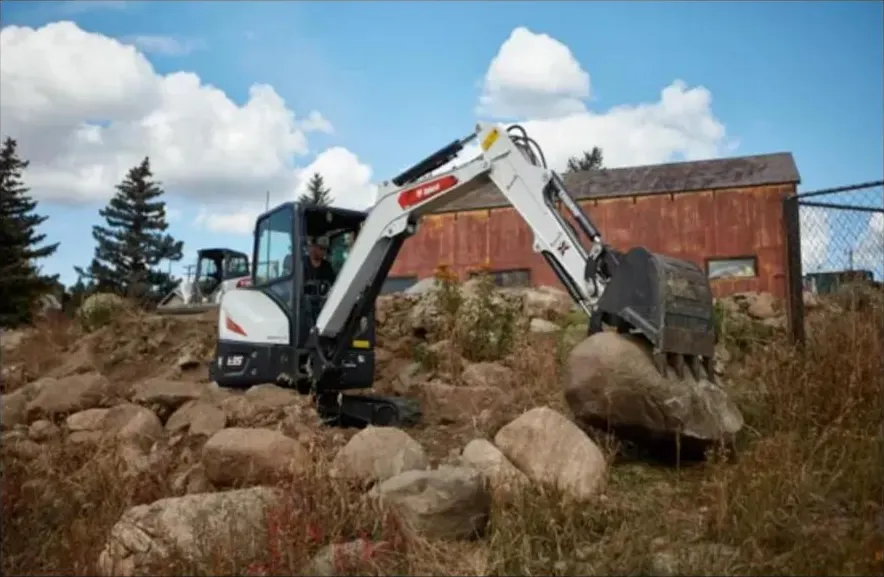
Wide or smooth bucket
Best for open excavation, loading a trailer and finishing a grade.
Bucket width sets the trench width and how much you lift per swing. A narrow bucket cuts a trench the size of what is going in it and gets through hard ground because the force is on fewer teeth. A wide bucket takes more dirt per pass and is slow or useless in a slot. Teeth are for digging; a smooth edge is for grading, cleaning a trench floor and spreading. The first bucket is included with every excavator rental, and most jobs that both dig and grade want a second one.
Best for a trench you will put something in, and for breaking hard ground.
Best for open excavation, loading a trailer and finishing a grade.
Pick the job to see the bucket and the machine it comes on.
A trench for a pipe or conduit should be only as wide as the pipe plus the bedding the installer wants. A narrow bucket cuts that, leaves clean walls and makes a spoil pile you can put back without hauling.
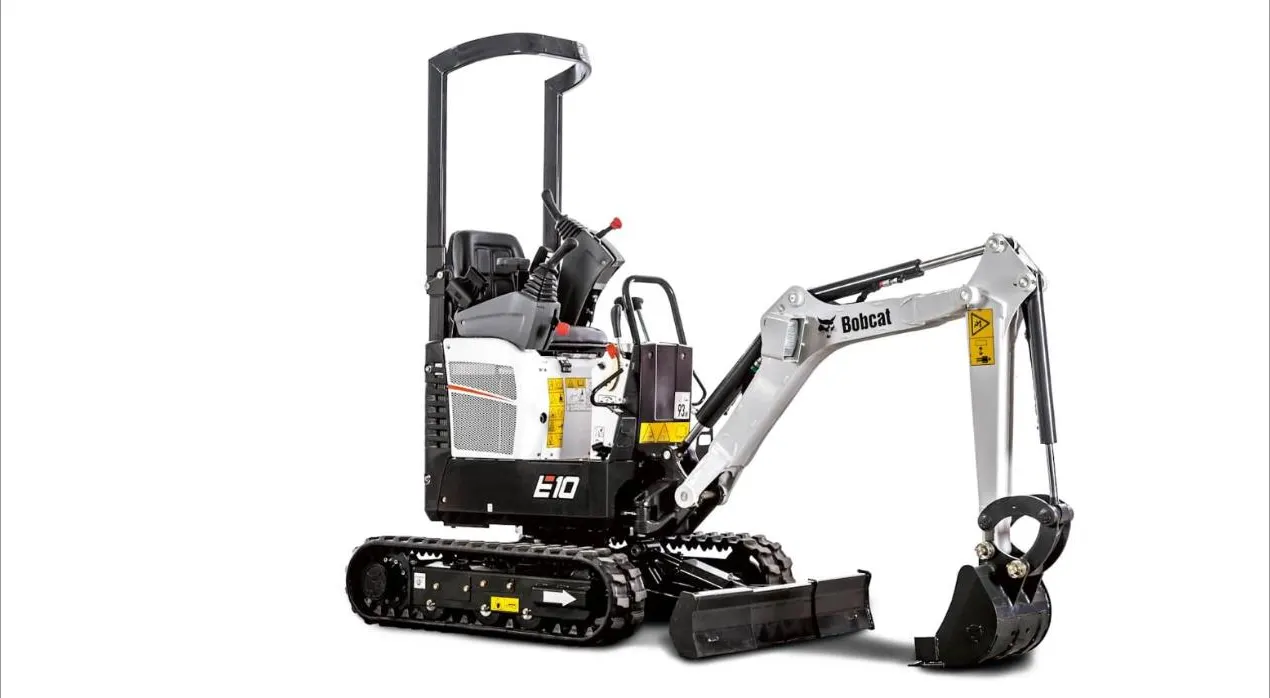
On the E10 the choice is the 8 in or 15 in toothed bucket; the 8 in is for conduit and small lines, the 15 in for a line that needs bedding room. On the E35 the 12 in toothed bucket is the trench bucket; the 24 in is too wide for most pipe runs. Water lines to frost depth (about 42 in in most of southeast Michigan) are excavator work because the trencher stops at 36 in. Dig depths are maximums at the pin; the E10 reaches about 6 ft, the E35 about 10 ft. Trench walls can collapse. Slope or shore anything a person stands in.
Footing trenches are wider than pipe trenches and the walls and floor matter, because the concrete takes their shape. Match the bucket to the footing width on the plans so you are not digging extra that you then have to form or fill.
Deck piers and small footings: the E10 with the 15 in bucket, or the auger if the plan calls for round piers. Garage, pole barn or addition footings: the E35 with the 12 in or 24 in toothed bucket depending on the drawing, and the 18 in smooth for cleaning the floor flat. The E48 adds reach and lift for a big footprint, not depth. The depth comes from your building department and the frost line; the inspector will want a clean, level bottom at that depth.
When there is no trench to keep narrow, the job is volume. A 24 in toothed bucket takes the most dirt per swing that the machine will lift, bites through roots, and loads a trailer in fewer passes.
The 24 in toothed bucket is the wide option on both the E35 and the E48 and the standard bucket on the E48. The E35 lifts 3,318 lb rated at a 118 in radius; the E48 lifts 4,921 lb rated at the same radius and reaches 207 in, so it swings a full wet bucket farther and loads a trailer or truck from a steadier position. Neither digs meaningfully deeper than the other. For a stump, teeth matter; the bucket pries roots as much as it digs. The E10's 15 in bucket is the volume option through a doorway.
A smooth edge leaves a flat surface where teeth leave furrows. For back-dragging backfill level, cleaning a trench floor, shaping a swale or spreading stone, the smooth bucket does in one pass what a toothed bucket does in three plus a rake.
Smooth buckets come in 12, 18 and 36 in for the E35 and 18 and 36 in for the E48. The 36 in is the grading bucket: wide enough to cover ground, and the width gives you a straight edge to pull. The 18 in cleans a footing floor or a trench bottom. Rent it as the second bucket with a toothed one for the digging; the first bucket is included and extras are added at booking. The E35 also has a blade for pushing fill and rough leveling.
From our product pages. Confirm what is on the shelf when you book.
Save these details before you request equipment.
Tell us what you're working on. Our Hamburg team serves Southeast Michigan, seven days a week.
(810) 231-7368
The first bucket is included with every excavator rental. Each additional bucket adds $30 for 1 to 24 hours, $90 for a week or $270 for four weeks. On a job that digs a trench and then grades or backfills, a narrow toothed bucket plus a smooth bucket is the usual pair, and the second bucket costs less than the time it saves. Tell us what is going in the hole and we will match the sizes.
As wide as the pipe or conduit plus the bedding the installer or the code requires on each side, and no wider. The installer or your building department sets that number, not us. Once you have it, pick the bucket at or just over it: 8 or 15 in on the E10, 12 in on the E35. A trench that is wider than it needs to be means more spoil to put back and more to compact. If the trench is 6 in wide and under 36 in deep, the trencher cuts it cleaner than any bucket.
Teeth for digging: they concentrate the force, bite into clay and roots and pry out stones. Smooth for finishing: cleaning a trench floor, back-dragging backfill level, shaping a swale or spreading stone. A smooth bucket in hard ground skates over the surface; a toothed bucket on a finish grade leaves furrows. Most people who do both on one rental take one of each.
No. Depth comes from the boom and arm, not the bucket. The E10 digs about 6 ft, and the E35 and E48 both dig about 10 ft at the pin, with the E48's advantage being reach and lift. Those are maximums at the bucket pin; practical depth is less. Anyone standing in a trench needs it sloped or shored, whatever the depth. Our mini excavator depth guide covers the three machines.
Yes, if you booked both. Buckets change on the machine in a few minutes. If you find mid-job that you need a bucket you did not book, call us; we can often get it to you or have it ready at the counter. Rental time runs on the machine, with unlimited hours, in periods of 1 to 4 hours, 4.5 to 24 hours, one week (3 to 7 days) and four weeks. Extra time is prorated, never more than the next full period.